
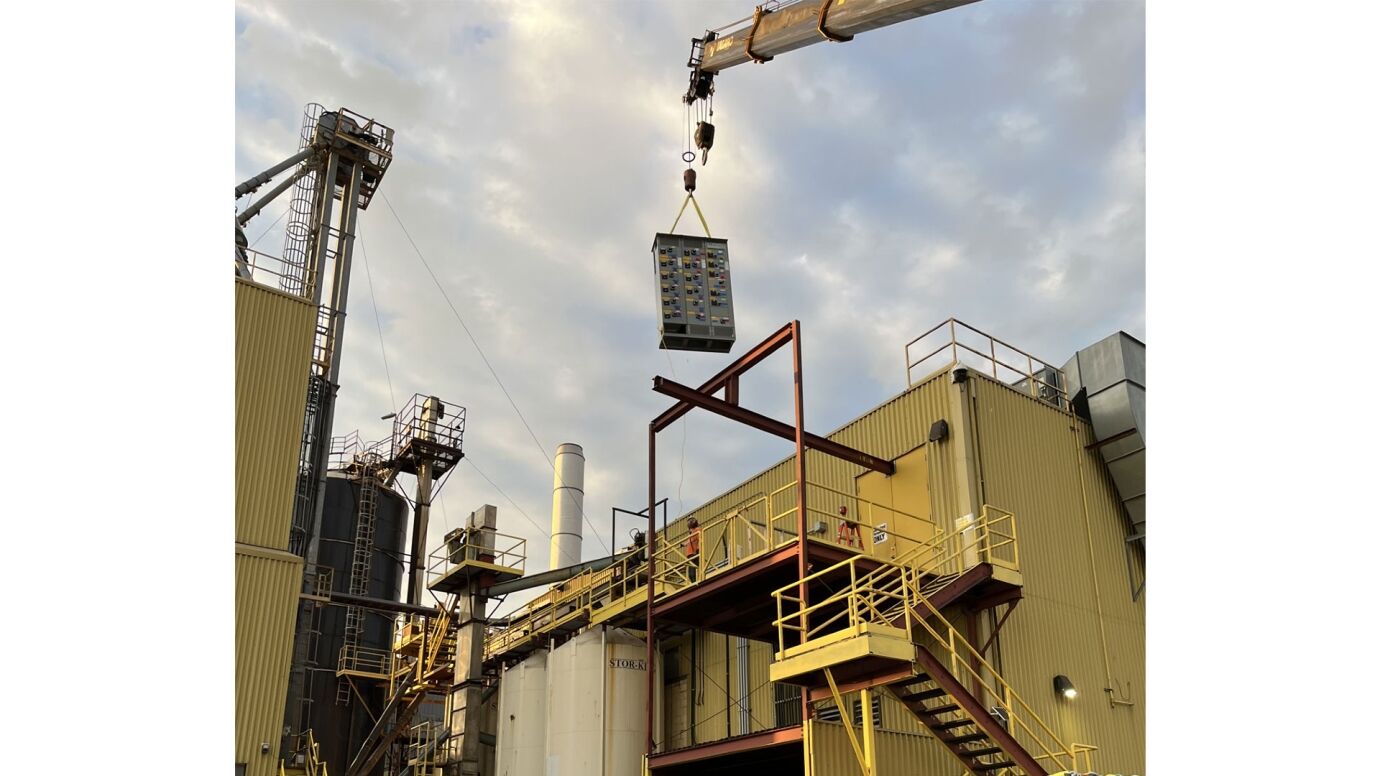
The Darling Ingredients retrofit project recently wrapped in Winnipeg—and it’s already being hailed as a model for future upgrades across the company’s North American facilities. Black & McDonald’s electrical division was tasked with replacing the motor control centres (MCCs) at the rendering plant, a high-stakes environment where downtime simply isn’t an option.
“They can’t stop running,” explained Ryan Field, who led the project. “If they do, product spoils, production is lost and they risk losing clients. So, outages were scheduled every Sunday throughout the summer to tackle the retrofit in phases.
Darling Ingredients is a global leader in sustainable solutions, converting animal by-products and food waste into ingredients used in food, feed, fuel, and fertilizer. A new client for Black & McDonald’s electrical division, Field said the success of this five-month project has laid the groundwork for a promising long-term relationship.
Instead of constructing new infrastructure—a common approach for MCC upgrades—the client and consultant devised a plan with a phased approach to reuse the existing electrical room. This decision saved the client an estimated $5 to $6 million and significantly reduced environmental impact.
“The old gear was packed into a low-ceiling electrical room,” Field said. “It was cramped, and full of aging components and cables we had to work with.”
Originally, the plan was to program a few sections of MCC at a time during the week just prior to the planned outage and then install.
To streamline the process, the team built a temporary test lab on-site. “We set up the new equipment with temporary power, Ethernet, lighting—everything it needed to function like it should,” he said. “That gave the client and the engineers time to fully program and test each of the MCCs before installation.” During the programming and testing of each MCC, issues were identified (programming and component failures) and corrected prior to the outage, and resulted in trouble free startups after every outage.
“It saved a lot of stress and potential delays,” he said. “It really set the stage for a successful outcome.”
Despite the complexity, B&M completed the project a full month ahead of schedule. And now, with the new gear online and the electrical room fully upgraded, the Winnipeg retrofit stands as a benchmark for future MCC projects.
“We came in with a really strong methodology—every line item of work was captured, identified, and scheduled in detail,” Field explained. “That level of planning and transparency ultimately won us the job, even though we were not the lowest bidder, we presented the best execution plan.
In the end, the team handed over a cleaner, more efficient system—and best of all, their approach is now being considered the new standard for MCC retrofits across all Darling Ingredients facilities.
“For me, it’s a great example of what smart planning and collaboration with our clients and consultants can achieve, and I’m excited to see where it leads,” Field said.
Learn more: BM_News_Winter_2026_EN.pdf